

SONG — “Not asleep”
The night stretched.
Not dramatically—just endlessly.
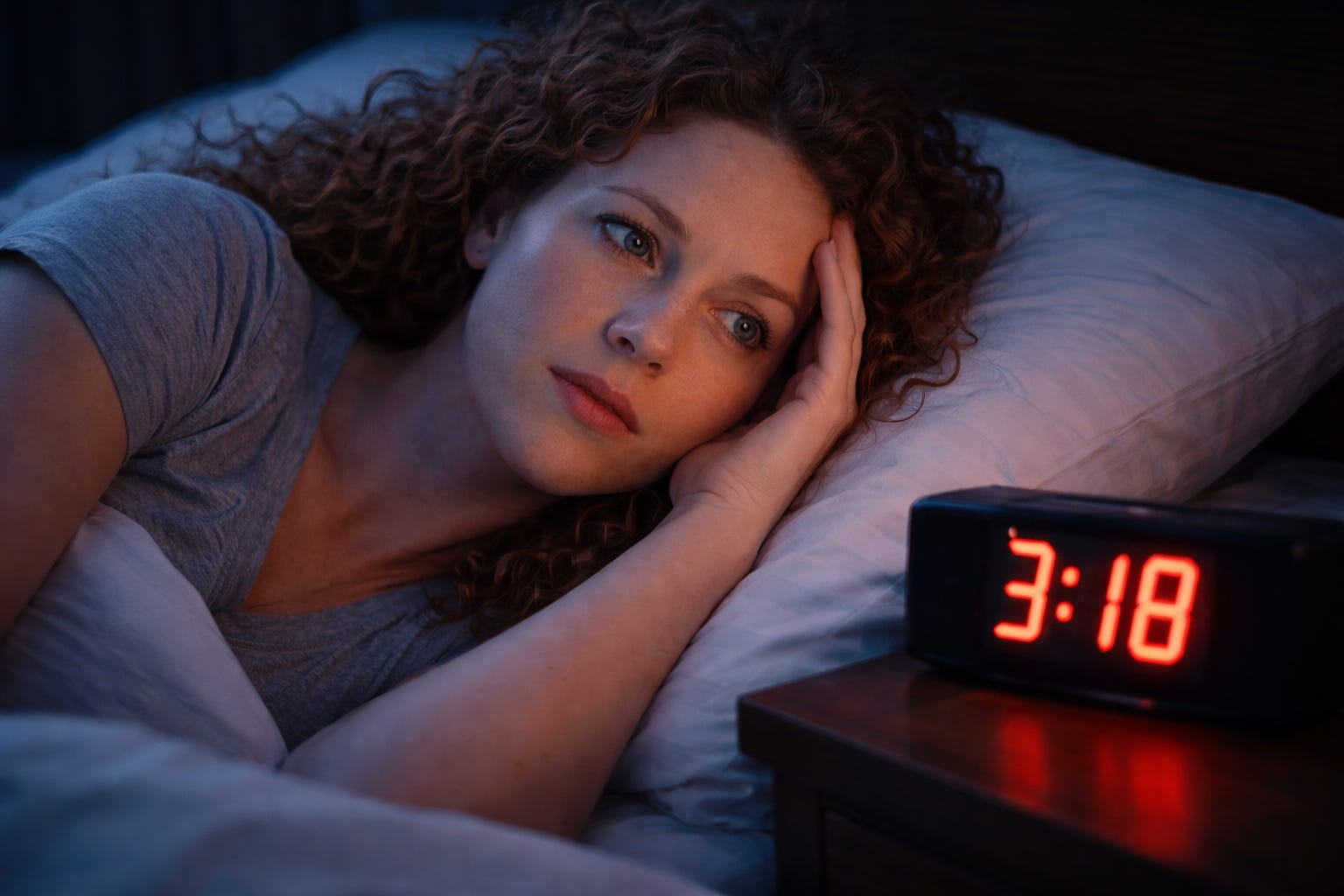
The clock glowed. The house slept. The body didn’t.
She lay there, eyes closed, mind alert, the familiar commentary starting up:
Tomorrow will be ruined.
I can’t function like this.
Why is this happening again?
At some point—somewhere between 2:00 and 3:00 a.m.—something gave way.
Not sleep.
The fight.
She noticed how tense her jaw was, how shallow the breath had become, how the belly stayed braced as if sleep were something that had to be captured.
And then the simplest thought appeared:
What if this isn’t a problem to solve?
She stopped trying to sleep.
Not as a technique.
As a surrender to fact.
Awake was happening.
She felt the sheets against her calves.
The weight of the blanket.
A distant car passing.
The slow pulse in her wrists.
Without the demand for sleep, the body softened. Not into unconsciousness—but into honesty.
There was fatigue, yes.
But there was also quiet.
She realised something she’d never allowed before:
Insomnia wasn’t the absence of rest.
It was the presence of resistance.
And in the absence of resistance, the night—though still wakeful—was no longer hostile.
Toward morning, sleep arrived or didn’t. It almost didn’t matter.
The real rest had already happened.
INVESTIGATION — “What Is Insomnia Made Of?”
This is not about fixing sleep.
It’s about seeing clearly what keeps you awake.
1. Separate wakefulness from struggle
Ask gently:
Am I awake… or am I fighting being awake?
Notice how much energy goes into the fight.
2. Feel the body, not the clock
Turn attention away from time.
Notice:
pressure in the eyes
tension in the jaw
holding in the belly
shallow or forced breathing
Ask:
What is the body actually doing right now?
Not what it should be doing.
3. Notice the future-projection
Insomnia is often fed by tomorrow.
Ask:
What story about the future is happening right now?
See the story as a story, not a prediction.
4. Drop the goal of sleep
Try this (quietly, sincerely):
“I’m allowed to be awake.”
Notice what happens in the body.
Often: a downshift.
5. The quiet recognition
Sleep is a biological function.
It doesn’t respond well to pressure.
When the inner war stops, the body is given the best conditions to do what it already knows how to do—whenever it can.