

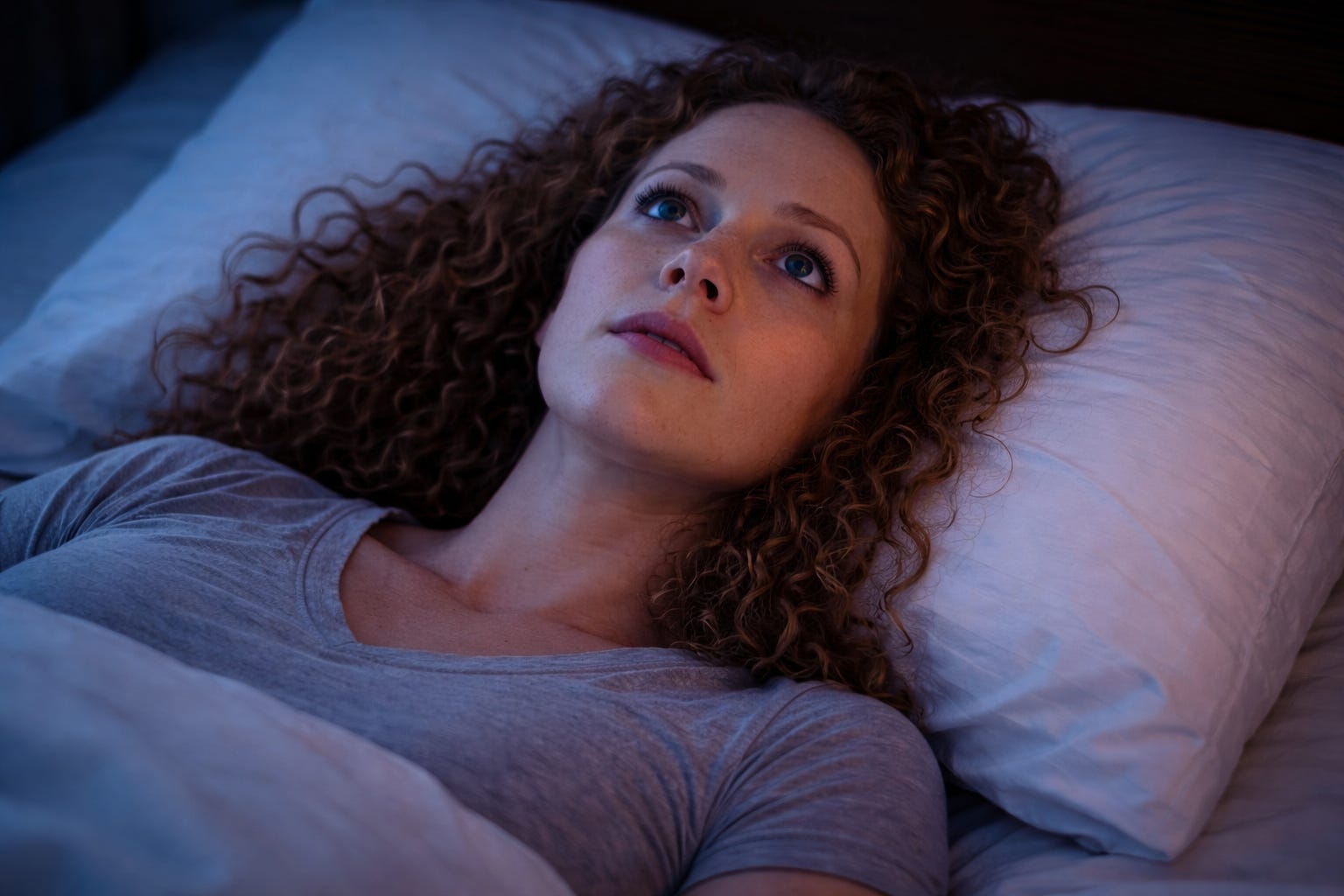
SONG — “I’m Not My Sleep”
She didn’t say “I didn’t sleep well.”
She said, “I’m an insomniac.”
It had become a fact about her, like eye colour or height. Something that explained everything in advance.
By evening, the story would already be warming up:
I’ll be tired tomorrow.
I never sleep.
My body doesn’t know how.
And sure enough, night would come—and the body would follow the script.
One night, awake again, she noticed something new.
Not the tiredness.
Not the alert mind.
The identity.
“I’m an insomniac” was happening now, as a thought.
Not as a truth.
As a sentence.
She stayed with that seeing.
The label carried weight—expectation, resignation, tension. It leaned the whole system toward vigilance. As if the body were being told, quietly but firmly: Stay alert. This is who you are.
She didn’t try to sleep.
She didn’t try to undo the label.
She simply stopped repeating it.
Instead of “I’m an insomniac,” there was just:
Awake is happening.
Something softened—not into sleep, but into neutrality.
For the first time, being awake didn’t feel personal.
And strangely, without an identity to defend, the body felt less obligated to stay vigilant.
Sleep came later—or didn’t.
But the story didn’t.
And that changed everything.
INVESTIGATION — “Who Is Awake?”
This inquiry isn’t about fixing insomnia.
It’s about seeing how identity sustains it.
1. Catch the label
When awake at night, notice:
“I’m an insomniac”
“I never sleep”
“This always happens to me”
Ask:
Is this a fact—or a thought happening now?
Stay with the event of the thought, not its content.
2. Feel the effect of the identity
Notice what the label does in the body:
alertness
bracing
resignation
tension
anticipation
Ask:
What does this name do to the nervous system?
Identity is not neutral.
3. Drop the name, not the experience
Try this silently:
“There is wakefulness, but no owner.”
Notice:
Does the body respond differently?
Does vigilance soften even slightly?
The experience can stay.
The identity doesn’t have to.
4. See the timing
Ask:
When did this identity appear?
Notice:
it arrives after wakefulness
it claims ownership
it predicts the future
It’s commentary, not cause.
5. The quiet recognition
You don’t have insomnia.
Sometimes, wakefulness happens.
When identity loosens, the body no longer has to perform it.