

Song — Let It Come, Let It Go
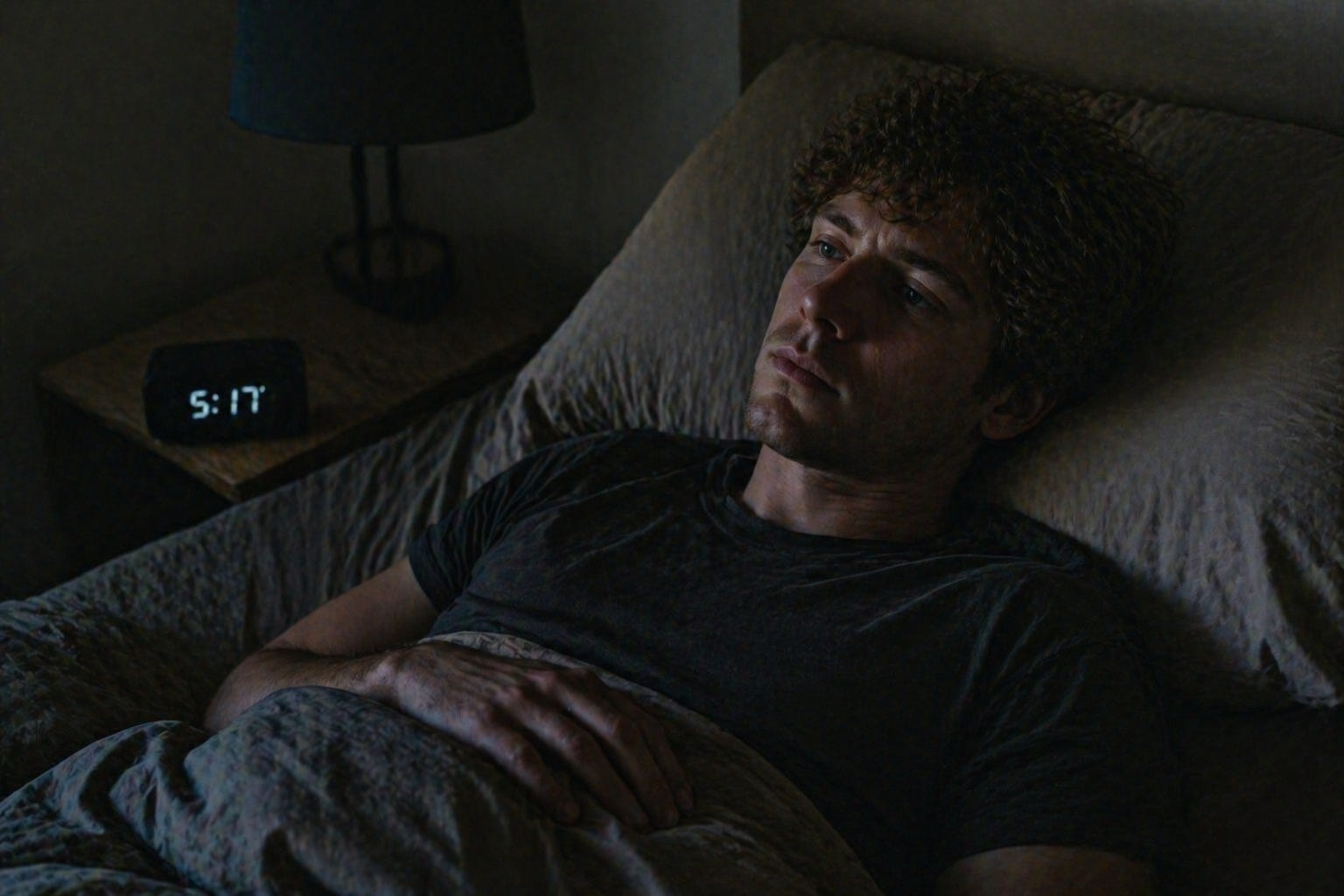
Daniel woke before the alarm and lay still, not because anything was peaceful, but because something in him was tired of immediately entering the day as a problem to solve. The room was half-dark, the curtain breathing slightly with the breeze from the cracked window, and before thought gathered itself there was only the dull weight of the blanket across his legs, the faint hum somewhere in the wall, the slow rise and fall in his chest.
Then, as it always did, the mind arrived and began finishing the morning. A feeling in the stomach became unease. Unease became something’s off. A little tightness behind the eyes became here we go again. Before he had even moved, the day had already been given a flavour, and he could feel the old reflex beginning to gather—the one that wanted to do something about it, to correct it, to get in front of it before it spread.
But he didn’t move. He didn’t try to return to some better state either. He just lay there long enough to feel the whole thing more honestly. The tightness wasn’t saying anything. The heaviness in the chest wasn’t delivering a verdict. The sensations themselves were simple, almost blunt. What made them seem important, personal, troubling, was the speed with which thought came in and arranged them into a familiar pattern. It was the same old trick, and it worked best when no one noticed it happening.
A thought drifted through—I shouldn’t still be dealing with this—and for a moment it almost caught him, almost pulled the whole morning closed around it. But now there was just enough space for him to see the movement itself. Not the content. The movement. The way the system reached, tightened, leaned forward, wanting the moment to become something else. The discomfort was one thing. The insistence that it must not be here was another. And that second thing, he could feel, was where most of the suffering lived.
Outside, a car passed, then another. Somewhere a bird started and stopped. The curtain lifted and settled. The body stayed warm under the blanket. None of it was profound. None of it carried an answer. It was only life before he had turned it into a case against himself.
The urge to fix the moment came again, softer now, but still recognisable. He felt it like a small reaching in the chest, a subtle internal leaning, almost as if the body were trying to get somewhere without moving. And because he saw it, he didn’t need to obey it. He didn’t need to suppress it either. It could come. It could stay for a second. It could leave. That was all.
He noticed then that this was what had been missed so many times before—not some special state of freedom, not a blank and thoughtless peace, but the simple fact that everything already knew how to move without his management. Sounds came and went. Sensations rose and changed. Thoughts formed and dissolved. Even the sense of “me,” that old feeling of being at the centre of everything, appeared the same way: a gathering, a claiming, a little knot of ownership forming around what had not belonged to anyone a moment before. It too could be seen. It too could be allowed.
He rolled onto his back and looked at the pale shape of morning beginning to gather in the room. The day had not improved. Nothing had been solved. The old patterns had not announced their permanent departure. But the grip had changed because the demand had changed. He was no longer asking experience to stop arriving in its familiar forms. He was no longer treating each contraction as proof that something had gone wrong.
It could come.
It could go.
That was enough.
And in the absence of that constant argument with what was already here, the room seemed strangely open again, not brighter, not holier, just less crowded by resistance. The morning had not become extraordinary. It had simply been returned to itself.
Investigation — Will the Illusion Ever Stop?
This question is almost universal:
👉 “Will the illusion of self ever disappear permanently?”
Let’s be clear.
1. The honest answer
👉 No — not necessarily
👉 And it doesn’t need to
Because the real shift is not:
👉 elimination of the illusion
But:
👉 recognition of it
2. What is “the illusion”?
It includes:
thoughts (“I am doing this”)
sensations (ownership, contraction)
patterns of identification
👉 These are conditioned processes
3. Conditioned processes continue
Just like:
habits
emotions
reactions
👉 They don’t instantly vanish
4. The mistake
Believing:
👉 “awakening = no more illusion ever”
This creates:
frustration
seeking
subtle resistance
5. What actually changes
Before:
👉 illusion appears → believed → becomes identity
After recognition:
👉 illusion appears → seen → passes
6. The key shift
Not:
👉 stopping the illusion
But:
👉 no longer being defined by it
7. Direct check
When the sense of “me” appears:
Ask:
👉 Is it happening?
Yes.
👉 Is it me?
Look.
It’s:
a sensation
a thought
a pattern
👉 Not a controller
8. The paradox
The more you try to stop it:
👉 the more it reinforces a “doer”
The more it is seen:
👉 the less it matters
9. What remains
life continues
perception continues
even the “me” feeling may continue
But:
👉 it is no longer taken as truth
10. Core line
The illusion doesn’t need to stop.
The belief in it does.